

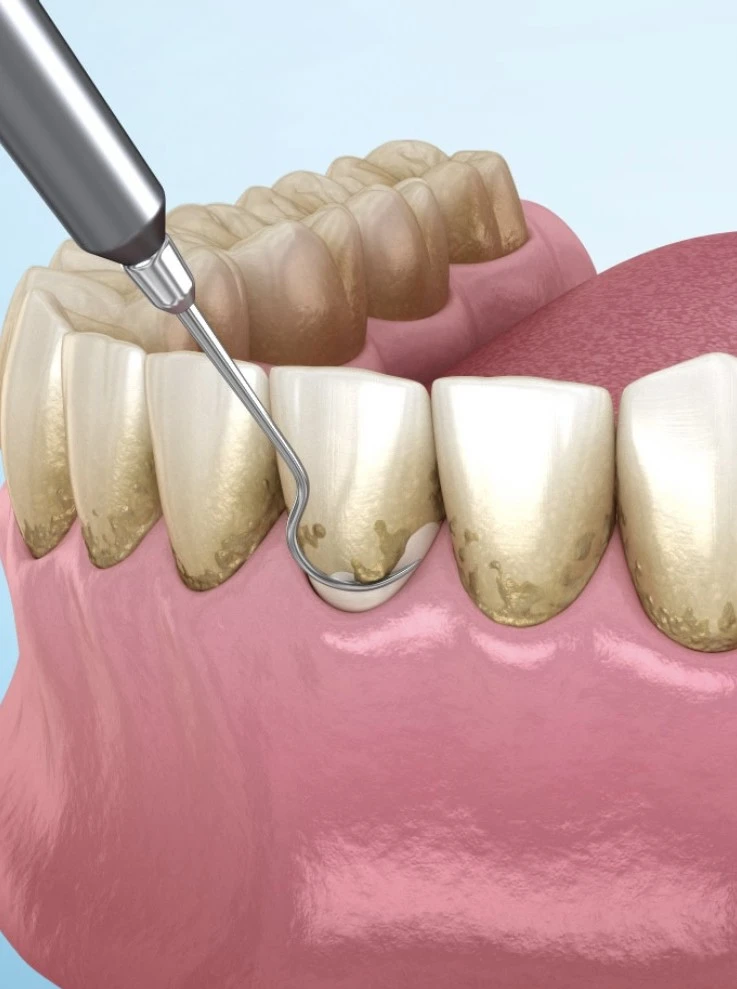
Treatment Definition and Scope
Periodontology is the specialty that examines the health of the supporting tissues surrounding the teeth, such as the gums, alveolar bone and cementum. The periodontal treatments applied in our clinic aim to eliminate the damage caused to the gums by microbial dental plaque, tartar and systemic diseases.
Disease Stages and Intervention Techniques
1. Gingivitis (Gum Inflammation)
This is the first stage of the disease. It manifests itself with bleeding, redness and swelling in the gums. With professional intervention at this stage, the disease can be completely reversed. If left untreated, the infection spreads to the lower tissues.
2. Periodontitis (Advanced Damage)
This is the stage at which the infection reaches the supporting bone tissue. Irreversible damage occurs in the gums and alveolar bone. At this stage, the gum pocket deepens and mobility (loosening) begins in the teeth. The treatment process may include operational interventions or deep cleaning (curettage) methods.
Technical Information: Plaque and food residues accumulating on the tooth surface combine with saliva minerals and turn into tartar. It is not possible to achieve full hygiene by brushing on a surface with tartar; it is mandatory that these deposits be removed with expert equipment in a clinical environment.
Clinical Application Protocol
- Detailed Examination: Measurement of gum pockets and radiological bone evaluation.
- Scaling (Tartar Removal): Cleaning hard deposits on the tooth surface with ultrasonic devices.
- Polishing: Smoothing the tooth surface and removing stains.
- Subgingival Curettage: Cleaning the inflamed tissues under the gum in necessary cases.
- Education and Follow-up: Patient-specific oral hygiene education and periodic check-ups every 6 months.
Why Are Regular Check-ups Necessary?
Because gum diseases usually progress painlessly, they are noticed late by patients. A regular dentist check-up every 6 months enables early diagnosis of diseases that may occur in the gums and prevents bone loss that can lead to tooth loss at an early stage.
Frequently Asked Questions About Treatment
No. Healthy gums do not bleed. Bleeding is the most fundamental indicator of an active inflammation and the need for professional cleaning.
No. Ultrasonic tips only remove the tartar on the outer surface by vibration without damaging the enamel. Tartar that is not cleaned causes bone loss.